Creative Economy Week Zimbabwe 2026 Empowers Young Fashion Designers and Creatives
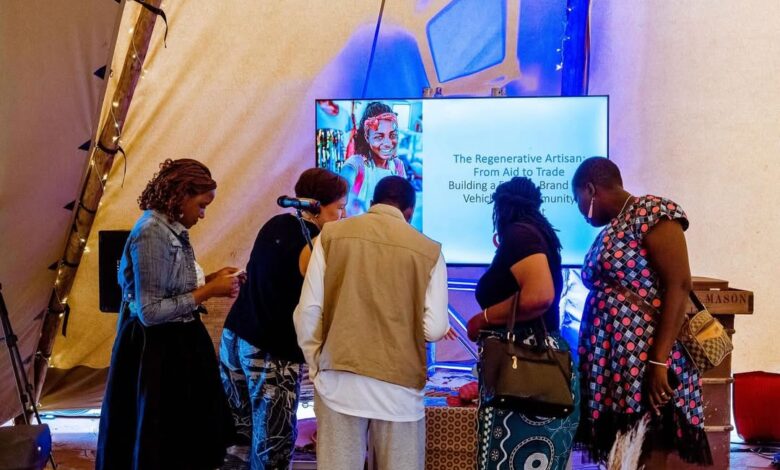
Young designers and creative professionals left Creative Economy Week Zimbabwe 2026 with more than inspiration, gaining practical skills, industry insights, and valuable networking opportunities. The six-day programme aimed to equip creatives with the tools to turn talent into sustainable, profitable businesses. Hosted by the British Council in partnership with the Embassy of Switzerland, the event brought together artists, entrepreneurs, and policymakers under the theme “Inclusive Growth Through Collaboration — Kuvaka Pamwe, Ukukhula Okuhlanganisayo.” Participants from diverse creative sectors benefited, with fashion designers among the primary recipients of targeted masterclasses, production insights, and discussions on scaling brands to meet both local and international standards.
Fashion designers gained first-hand exposure to industrial textile production during a manufacturing immersion at David Whitehead Textiles in Kadoma. The experience offered a rare opportunity to observe large-scale operations, including quality assurance, production planning, costing, and scaling processes. For emerging designers who usually operate on small production volumes, this visit illustrated how local fashion could achieve global production benchmarks. Attendees left with practical knowledge on transforming ideas into market-ready products, understanding the business side of fashion, and navigating the supply chain efficiently. The immersion also highlighted the potential for Zimbabwean fashion to compete internationally while maintaining authenticity.
Government officials emphasized the economic significance of the creative sector throughout the week. Dr Biggie Samwanda, Director of Arts and Culture in the Ministry of Sport, Recreation, Arts and Culture, noted the government’s commitment to supporting creatives through policy and capacity-building initiatives. Agencies such as the National Arts Council of Zimbabwe and the National Gallery of Zimbabwe play an active role in providing training and resources for emerging talent. Designers also participated in a masterclass on “Running a Fashion Brand as a Social Enterprise,” led by Batoka Creatives and Pakistan-based expert Amneh Shaikh-Farooqui, which explored integrating social impact into business models while remaining financially sustainable. These sessions provided participants with the skills to manage brands responsibly and strategically.
The week also explored the cultural dimension of fashion, emphasizing storytelling and heritage preservation. The “Threads of Heritage: Fashion as Film and Story” panel highlighted the role of designers as custodians of Zimbabwean culture, using fabric and design to communicate identity and tradition. Complementing this, investment expert Peggy Mapondera offered guidance on financial management, teaching creatives to move beyond basic bookkeeping and position their brands for long-term growth. Panels on the textile value chain demonstrated the importance of connecting agriculture, manufacturing, and fashion design, showing how local resources can strengthen the entire industry. These sessions reinforced the idea that creativity must be paired with strategy to achieve sustainable success.
Creative Economy Week Zimbabwe 2026 concluded with broader discussions across the creative industries. Music professionals from Mavin Records, led by Don Jazzy, provided insights on audience growth through digital platforms. Leaders including Bulawayo Mayor David Coltart joined the Magitare Confluence to discuss cross-sector collaboration. The week ended with a fireside chat featuring Zimbabwean pop star Gemma Griffiths, highlighting ways to break industry barriers and build resilient creative careers. Overall, the event empowered young designers and creatives with knowledge, networks, and practical experience, demonstrating that with skill, strategy, and collaboration, Zimbabwe’s creative economy can grow inclusively and sustainably.