Kirsty Coventry Emphasises Responsibility and Role Model Duty as IOC President
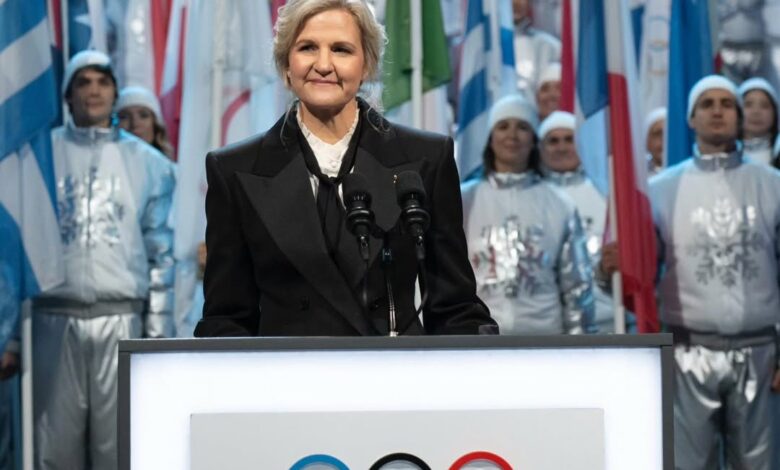
International Olympic Committee president Kirsty Coventry says she fully understands the responsibility that comes with being viewed as a role model, both during her career as an elite athlete and now in her leadership role. The Zimbabwean Olympic legend, who won seven Olympic swimming medals, reflected on her journey and influence while speaking on IMD’s Leaders Unplugged podcast. Her comments come at a time when global sport continues to place greater emphasis on leadership accountability, representation, and visibility. Coventry now holds a historic position as the first female and first African president of the IOC, marking a significant shift in global sports governance. Her rise to the top of international sport has made her one of the most influential figures in the Olympic Movement.
Coventry spoke openly about the expectations placed on athletes and leaders once they reach elite status. She said she is constantly aware of her visibility and the impact her actions can have on others. Her perspective reflects lessons she has carried from her competitive swimming career into administration. She highlighted a message she once heard from a National Basketball Association player, who explained that athletes do not get to choose whether they are role models once they reach a high level. According to Coventry, the only choice left is whether one becomes a positive or negative example.
She explained that public figures often underestimate how quickly their influence grows once success arrives. In her view, achievement automatically places individuals in a position where their behaviour is observed and judged. This means decisions made in everyday life carry greater weight than many realise. Coventry stressed that visibility removes the option of remaining outside the role model category. Instead, individuals must consciously decide how they want to be perceived by the public.
Coventry also pointed to the modern media environment, where athletes and leaders operate under constant scrutiny. Social media and traditional reporting have made it difficult for public figures to separate personal life from public perception. Every decision can be shared, analysed, and debated in real time. This environment increases pressure but also strengthens the importance of responsible behaviour. Coventry’s comments highlight how leadership today requires awareness of both performance and conduct beyond the field of play.
As IOC president, Coventry is responsible for guiding one of the most influential sports organisations in the world. Her role includes shaping policy, overseeing global sporting events, and ensuring the Olympic Movement remains relevant to younger generations. She acknowledged that expectations around transparency and inclusion continue to grow. These demands require leaders to be consistent in both messaging and action. Coventry’s leadership style reflects her belief that values such as excellence, respect, and friendship must be actively demonstrated, not just promoted.
Her background as one of Africa’s most decorated Olympians gives her a strong foundation in athlete-related issues. Having represented Zimbabwe at multiple Olympic Games, she understands the challenges faced by competitors at the highest level. Her experience includes not only success in the pool but also exposure to governance, mental health discussions, and fair competition concerns. This lived experience allows her to approach leadership with practical understanding rather than theory alone. It also strengthens her credibility when addressing athlete welfare and structural reforms within sport.
Coventry emphasised that success itself removes the choice of whether one becomes a role model. Instead, she said the responsibility is already assigned once a person reaches a certain level of achievement. From that point, the focus shifts to the quality of decisions made on a daily basis. She noted that these decisions determine how individuals are perceived by society, especially by younger people who look up to public figures. Her message reinforces the idea that leadership is defined by consistent behaviour rather than isolated achievements.
In today’s sporting world, Coventry’s message carries wider relevance beyond athletics. Athletes and leaders now operate in an environment where influence extends far beyond competition results. Their actions contribute to public conversations about values, discipline, and accountability. Coventry’s perspective highlights the growing expectation that successful individuals must recognise their broader social impact. This responsibility applies not only to athletes but to anyone in a position of visibility and influence.
As the first African and first female IOC president, Coventry represents a milestone in global sports leadership. Her journey from Olympic champion to international administrator reflects both personal achievement and changing attitudes toward diversity in leadership. Her comments on role modelling reinforce the idea that leadership is not defined by position alone but by behaviour and consistency. In her view, success brings responsibility that cannot be avoided, only managed. Her leadership continues to shape how the Olympic Movement approaches modern challenges.
Kirsty Coventry’s reflections underline a central message about influence in sport and society. Visibility removes the option of neutrality, leaving only the choice of how to act under constant observation. Her experience shows that leadership requires awareness, discipline, and accountability at all times. As IOC president, she continues to embody these principles while guiding global sport into a new era. Her message serves as a reminder that being a role model is not a decision made once, but one that is renewed through everyday actions.