Zana K Defends Winky D’s Controversial Tete-a-Tete Season 2 Outfit
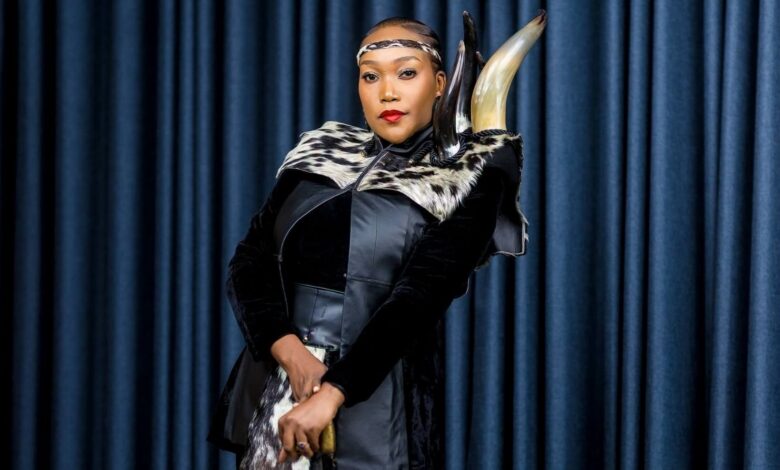
Local fashion designer and founder of A Tribe Called Zimbabwe, Zana K, has defended Winky D’s striking outfit at the Tete-a-Tete Season 2 concert, calling for greater openness towards symbolism, fashion and artistic expression. The reggae-dancehall star’s appearance at Alex Sports Club in Harare on Saturday quickly became one of the most discussed moments of the event. His elaborate stage outfit featured a hood decorated with two prominent golden horns and a jewellery goat’s head positioned across his chest. The unusual design immediately divided opinion among fans, with some praising its theatrical quality while others questioned whether the imagery carried demonic or religious meanings. The debate has since extended beyond Winky D’s fashion choice, raising wider questions about how audiences interpret creative expression and symbolism.
Winky D has built a reputation for combining music, fashion and powerful visual presentation as part of his artistic identity, making his appearance at the Tete-a-Tete Season 2 concert particularly memorable. The outfit stood out because of its dramatic hood, golden horns and goat-inspired jewellery, creating an image that naturally attracted attention from the audience and online viewers. Once photographs and videos from the concert began circulating, social media users quickly began offering different interpretations of the ensemble. Some saw the clothing as an extension of stage theatre, where exaggerated designs can help performers create a particular mood and visual identity. Others associated the horns and goat imagery with religious symbolism, demonstrating how the same creative image can produce very different reactions depending on the viewer’s cultural or spiritual background.
The controversy intensified as images of Winky D’s outfit spread across social media platforms and private group chats. In Zimbabwe, visual symbols can carry strong cultural and religious associations, which means that certain designs may generate reactions that go beyond conventional discussions about fashion. For some members of the public, the presence of horns and a goat’s head immediately triggered concerns about evil or demonic imagery. Others argued that such an interpretation overlooks the long history of animals, horns and exaggerated figures being used in art, fashion, theatre and popular culture. The disagreement has therefore become less about the physical outfit itself and more about whether audiences should allow creative work to exist without assigning a fixed meaning to every visual element.
Zana K has challenged what she sees as an overly quick tendency to associate horns with evil. In her social media commentary, the designer pointed out that Zimbabwean audiences can sometimes move rapidly from seeing an unusual symbol to making a spiritual interpretation about it. She used humour to illustrate her argument, suggesting that even imagery involving fire or water could potentially be interpreted through a supernatural or religious lens. Her comments highlight the difficulty creatives face when introducing unconventional ideas into an environment where visual symbols may already carry deeply established meanings. For Zana K, the discussion should include room for curiosity and interpretation instead of immediately treating unfamiliar imagery as evidence of something sinister.
The designer also brought historical context into the discussion by referencing the development of goat-headed imagery in European occult traditions. She specifically mentioned French occultist Éliphas Lévi and his famous 19th-century depiction of Baphomet, which became associated with a range of symbolic and esoteric interpretations. Lévi’s image has often been discussed in relation to concepts involving opposites, balance and symbolism, although the figure was later adopted and interpreted within Satanic traditions. Zana K’s point was not necessarily to argue that all goat imagery has one specific meaning, but rather to challenge the assumption that every depiction of horns or goats automatically represents the Christian devil. Her argument encourages audiences to consider the historical development of symbols before assigning a definitive spiritual meaning to a contemporary fashion design.
The designer’s comments have also highlighted the important difference between an artist’s intention and an audience’s interpretation. Fashion does not always communicate a single message, especially when it forms part of a live performance where music, lighting, choreography and costume work together. A performer may choose a particular design because of its visual impact, cultural reference, theatrical value or personal artistic identity, while viewers may attach completely different meanings to it. This does not mean that audiences cannot question or criticise creative decisions, but it does create space for a more nuanced discussion. Zana K’s call for creatives to have room to experiment reflects a broader debate within the entertainment industry about how far artistic freedom should extend when visual choices provoke strong public reactions.
Winky D’s decision to wear such a distinctive outfit also demonstrates the growing importance of fashion in modern music performance. Musicians increasingly use clothing as part of their branding, storytelling and stage identity rather than treating it as a secondary element. A memorable outfit can become closely associated with a particular performance and can generate conversations long after the event has ended. In Winky D’s case, the dramatic design ensured that his appearance became a major talking point alongside the music performed at the concert. Whether audiences liked or disliked the outfit, its ability to generate discussion demonstrates the influence that visual presentation can have on an artist’s public image.
The controversy also places Zimbabwean creatives at the centre of an important conversation about experimentation within the local fashion and entertainment industries. Designers often work with historical references, cultural symbols, unusual materials and abstract concepts to produce distinctive work. Musicians then use these designs to build stage personas and create memorable performances, but unconventional choices can sometimes collide with established social beliefs. This can make creative experimentation challenging, particularly when audiences interpret symbolism according to their own religious or cultural frameworks. The discussion surrounding Winky D’s outfit therefore offers an opportunity for designers, musicians and audiences to consider how Zimbabwe’s creative industries can encourage originality while still allowing space for differing interpretations.
Winky D has not publicly explained the specific inspiration behind the outfit, leaving audiences to form their own conclusions about its meaning. That absence of an official explanation has arguably contributed to the intensity of the discussion because viewers have been left to interpret the imagery independently. Until the musician provides further context, it remains difficult to establish whether the horns and goat imagery were intended to communicate a particular message or were primarily chosen for their theatrical and fashion value. Zana K’s defence does not necessarily settle that question, but it does challenge the idea that one interpretation should automatically become the accepted explanation. The situation shows how quickly a stage costume can become a cultural talking point when it intersects with sensitive symbols.
The response from Zana K and other members of the creative community also reflects the importance of protecting space for artistic exploration. Creative industries depend on designers, musicians and other artists being able to test ideas that may not immediately appeal to everyone. At the same time, audiences retain the right to question imagery and express discomfort when they feel a creative choice conflicts with their beliefs. The challenge lies in allowing those conversations to take place without automatically branding artists or their work based solely on a single visual symbol. Winky D’s Tete-a-Tete Season 2 appearance has shown that fashion can provoke serious cultural discussions, even when its original purpose may simply have been to create a powerful stage image.
The debate surrounding Winky D’s outfit is likely to continue as more people engage with the images and commentary from the concert. Zana K’s intervention has added an important creative-industry perspective by encouraging people to consider symbolism through historical, artistic and cultural contexts rather than relying on immediate assumptions. Whether the outfit ultimately represents a deliberate artistic statement, theatrical fashion or simply an unconventional design choice remains unclear without an explanation from Winky D himself. What is clear is that the ensemble has succeeded in attracting attention and generating a wider conversation about fashion, music and artistic freedom in Zimbabwe. The controversy ultimately reinforces Zana K’s central argument that creatives should have room to explore ideas, while audiences should have room to interpret those ideas thoughtfully before reaching definitive conclusions.