Thirty-Four Women Graduate from DEAL Programme, Boosting Zimbabwe’s Digital Skills Pipeline
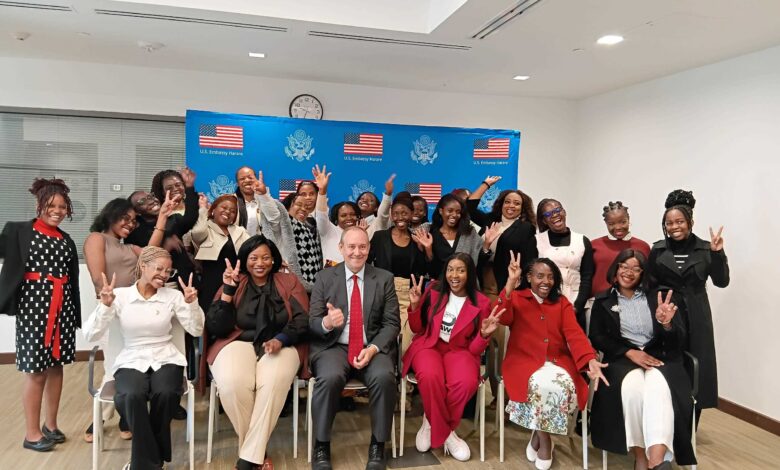
Thirty-four young women have successfully completed the inaugural Data Empowerment, Actualization and Leadership (DEAL) Programme, marking a major step in efforts to close the digital skills gap in Zimbabwe. The graduation ceremony took place at the United States Embassy in Harare, where participants were recognised for completing a 12-week intensive training programme focused on data and technology skills. The initiative was designed to prepare women for opportunities in employment and entrepreneurship within the country’s expanding digital economy. It also aimed to strengthen participation in science and technology fields where women remain underrepresented. The programme has been described as a practical response to the growing demand for skilled data professionals in Zimbabwe.
The DEAL Programme was launched in January 2026 and initially targeted 50 participants, but 34 women successfully completed the full training cycle. It was developed and implemented by DataWired, a data consultancy and training organisation founded by Gcinithemba Sherilyn Maphosa. The organisation focuses on helping individuals and institutions use data to improve decision making and performance. The programme was offered free of charge and included online learning combined with structured mentorship. Participants were exposed to practical data skills designed to prepare them for real workplace demands in both corporate and entrepreneurial environments.
The graduation marked a significant milestone for DataWired, which continues to position itself as a key player in digital skills development in Zimbabwe. Gcinithemba Sherilyn Maphosa said the programme was created to address the gap between education and employment, particularly in the technology sector. She explained that many young people complete academic studies but struggle to transition into meaningful jobs or business opportunities. The DEAL Programme was therefore structured to bridge that gap through targeted skills training and mentorship. She also emphasised that the goal is to build a generation of women who are confident, skilled and ready to take on leadership roles in data driven industries.
Maphosa highlighted the growing importance of data in modern economies, noting that it now plays a central role in business operations, governance and innovation. She described data as a key resource that influences decisions across all sectors. According to her, organisations increasingly rely on data analysis to improve efficiency and competitiveness. She also encouraged participants to view their new skills as tools for both employment and entrepreneurship. Her message focused on the need for adaptability in a rapidly changing digital environment where data literacy is becoming essential.
A key feature of the programme was its mentorship component, which paired participants with experienced female professionals working in leadership roles across data and technology fields. These mentors included individuals serving on boards and in senior management positions. Their role was to provide guidance on career development, technical skills and professional growth. They also helped participants navigate the large volume of information available online by focusing on practical and relevant learning paths. This structured mentorship was designed to ensure that graduates not only gain technical knowledge but also understand how to apply it effectively in real world settings.
The United States Embassy in Harare played a significant role in supporting the programme, reinforcing its commitment to strengthening STEM education and digital inclusion. U.S. Embassy Deputy Chief of Mission Phil Nervig praised the graduates for their achievement and highlighted the importance of investing in women in science and technology fields. He noted that the programme contributes to building a pipeline of skilled women who will play a role in shaping Zimbabwe’s digital future. He also acknowledged the collaboration between DataWired, the Harare Institute of Technology and the embassy as an example of effective partnership. The Harare Institute of Technology provided additional support, helping to anchor the programme within a local academic and innovation framework.
The DEAL Programme also reflects broader efforts to expand digital literacy and technical skills across Zimbabwe’s workforce. By focusing specifically on women, the initiative addresses gender disparities in the technology sector while also contributing to national development goals. Graduates of the programme now have the opportunity to pursue careers in data analysis, technology consulting and digital entrepreneurship. The success of the first cohort has set a foundation for future editions of the programme. As demand for digital skills continues to grow, initiatives like DEAL are expected to play a key role in shaping a more inclusive and competitive technology sector in the country.