Zimbabwean Students Shine at Chinese Character Hero Contest
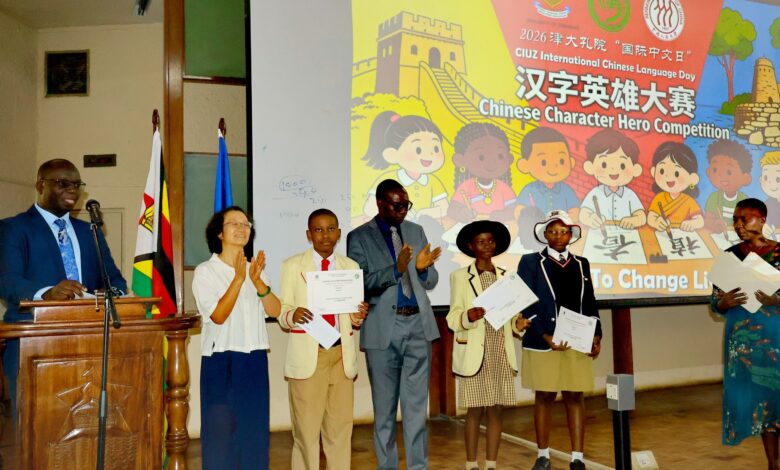
Zimbabwean students showcased remarkable linguistic skill and cultural awareness during the third edition of the Chinese Character Hero Contest held at the University of Zimbabwe on Friday. Organised by the University’s Confucius Institute, the event brought together learners from primary, secondary, and tertiary institutions, highlighting both their proficiency in the Chinese language and their appreciation for Chinese culture. The competition aims to strengthen educational and cultural ties between Zimbabwe and China while inspiring young people to explore multilingualism. Participants were tested not only on their understanding of Chinese characters but also on their ability to engage with the broader cultural context behind the language. The event provided a platform for students to demonstrate how language learning can connect people and broaden perspectives.
Chinese Ambassador to Zimbabwe Zhou Ding emphasized the cultural significance of Chinese characters, describing them as central to China’s heritage. He highlighted that each character is more than a symbol, representing unique historical and cultural values, and stressed that learning Chinese opens new opportunities for communication and collaboration across borders. The ambassador called the contest “a bridge between languages, between cultures, and between the young generations of our two great nations,” underlining its role in fostering long-term cultural exchange. His remarks reflected China’s commitment to supporting education initiatives that promote understanding and cooperation between the two countries. The presence of such high-level diplomatic support underscored the importance of the contest in building both skills and relationships.
Fainos Mangena, Dean of the Faculty of Arts and Humanities at the University of Zimbabwe, spoke about the global relevance of multilingualism, stressing that developing language skills is essential for Zimbabweans in an increasingly interconnected world. He noted that fluency in languages such as Chinese equips students to engage meaningfully in international academic, economic, and cultural spaces. Participants expressed enthusiasm for the opportunity to compete, highlighting the personal and educational benefits of taking part. Chanelle Jemwa of F.D. Roosevelt Girls High School, who placed third in the secondary school category, expressed gratitude for the experience and encouraged her peers to pursue language learning to strengthen cross-cultural understanding. Her comments illustrated how contests like these inspire students to view language as a gateway to broader global engagement.
In the tertiary category, Nkala Cathrine Nqadini from Matabeleland emerged as the overall winner, demonstrating both skill and commitment to promoting Chinese language education. As a teacher, she emphasized the importance of sharing her language knowledge with her students, reflecting the broader impact of such competitions on education in Zimbabwe. In the secondary school category, Shungu Mbofana of Cornerstone College won first prize, receiving a tablet in recognition of his performance. Participants across all categories received a combination of cash prizes, certificates, and technology rewards, reinforcing the value of dedication and achievement. These incentives highlighted how the contest supports both academic excellence and practical skill development.
Laston Mukaro, Director of the Confucius Institute, encouraged students to continue building their proficiency in Chinese, noting that mastering the characters is key to understanding the language and its culture. The contest reflects growing interest among Zimbabwean learners in Chinese language education and demonstrates the expanding educational and cultural collaboration between Zimbabwe and China. Initiatives like this not only foster academic growth but also prepare young people for future opportunities in global engagement. By combining competition with cultural exchange, the Chinese Character Hero Contest helps students build confidence, knowledge, and skills that extend far beyond the classroom. The event confirmed the role of language learning as a bridge to international connection and mutual understanding.