Ekhaya Worship Festival Turns Hartfield Stadium Into a Historic Cathedral of Praise
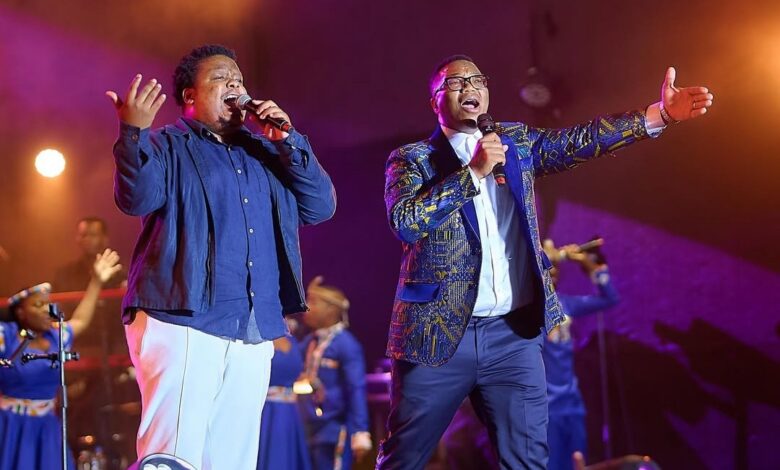
For one unforgettable night, Hartfield Stadium became far more than a sporting venue. The famous arena in Bulawayo transformed into a powerful space of worship, unity and spiritual renewal as thousands gathered for the 2026 edition of the Ekhaya Worship Festival. What is normally a ground filled with football chants and roaring supporters turned into a sacred atmosphere overflowing with gospel music, prayer and emotional connection. The festival drew a record-breaking crowd of 15 000 people, making it the largest gospel music gathering ever witnessed in Zimbabwe. From the earliest hours of the day, the city carried a unique energy as worshippers from different communities made their way toward an event many later described as life-changing.
The roads leading to Hartfield Stadium quickly became crowded with streams of believers wrapped in winter clothing, families carrying blankets and groups of young people singing songs of praise before even reaching the gates. Elderly worshippers walked carefully alongside relatives while church groups arrived waving banners and celebrating together. The excitement surrounding the festival was visible throughout Bulawayo as shops, transport operators and local businesses experienced the ripple effect of the major gathering. The decision by organisers to move the event from the Zimbabwe International Trade Fair grounds to the much larger Hartfield Stadium initially raised doubts among some observers. Questions circulated about whether gospel music could truly attract crowds large enough to fill such an enormous venue, but by nightfall those concerns had completely disappeared as every section of the stadium overflowed with worshippers.
The success of the move symbolised more than attendance growth. It reflected the rising influence of gospel music within Zimbabwean culture and entertainment. Every aisle inside the stadium carried songs of praise while every section of the crowd responded passionately to performances taking place on stage. The atmosphere proved that gospel music now commands the same level of excitement and support often associated with mainstream entertainment events. Many attendees described the experience as a pilgrimage rather than a concert because of the deep spiritual significance attached to the festival. Ekhaya Worship Festival has steadily evolved into a movement that connects faith, culture and community in a way few events in the country have managed to achieve.
One of the most praised additions to this year’s festival was the introduction of a Health Expo before the main worship programme began. In many entertainment spaces, social responsibility often receives little attention, but the organisers of Ekhaya Worship Festival deliberately created an initiative focused on community wellness. Free health screenings, consultations and awareness programmes were offered to attendees throughout the afternoon. The combination of healthcare and worship gave the festival a more meaningful purpose that extended beyond music alone. It highlighted the organisers’ understanding that spiritual encouragement and physical wellbeing are closely connected in everyday life.
Among the many people attending the expo was 87-year-old Gogo Epiphania Nqubalo from Luveve, whose presence became one of the most touching stories of the day. Assisted by relatives as she slowly moved through the health stations, she later joined thousands inside the stadium for the worship experience. She explained that while she came seeking prayer and spiritual encouragement, the free health services were equally important for elderly citizens who often struggle to access regular medical support. Her comments reflected the broader impact of the festival on ordinary people across different age groups and backgrounds. The Health Expo transformed the gathering into more than a music event because it addressed practical needs affecting communities throughout Zimbabwe.
As the evening programme unfolded, another major shift became immediately noticeable. Unlike previous editions that focused mainly on established stars, this year’s festival deliberately created opportunities for emerging gospel artistes to perform on the massive stage. The decision allowed younger voices to minister before one of the largest gospel audiences ever assembled in the country. Upcoming performers embraced the opportunity with confidence and passion, delivering memorable moments that connected deeply with the crowd. The result was a balanced programme where experienced musicians and rising talent complemented each other throughout the night.
The line-up featured powerful performances from groups and artistes including Reality 7, The Unveiled, Joyful Praise Choir, Zimpraise, Vocal Ex, Lorraine Maplanka, Takesure Zamar, Blessing Jeduthun and South African gospel star Dumi Mkokstad. Every performance brought a different emotional and spiritual dimension to the festival while maintaining a consistent atmosphere of worship and celebration. The crowd responded enthusiastically to each act, singing along passionately and filling the stadium with energy from beginning to end. There were no weak performances during the programme because every artiste appeared fully prepared for the significance of the occasion. The smooth transitions between performers also demonstrated the high level of organisation behind the production.
When Everton Mlalazi finally appeared on stage, the atmosphere inside Hartfield Stadium reached another level entirely. The cheers from the crowd rolled across the venue with incredible force as worshippers celebrated the arrival of the man many viewed as the heart of the festival. Yet before beginning his set, the programme paused for a deeply personal family moment that touched thousands in attendance. His daughter Natasha led the stadium in singing “Happy Birthday” while family members, fellow artistes and supporters joined together in celebration. For a few minutes, the massive arena felt less like a huge public gathering and more like an intimate family occasion filled with warmth and gratitude.
Another memorable surprise followed shortly afterwards when Mlalazi’s younger daughter, Keisha, stepped behind the marimba to introduce the song “Hakuna Zita.” The use of traditional Zimbabwean instrumentation added cultural richness to the worship experience and immediately sparked excitement across the stadium. Worshippers rose to their feet, danced enthusiastically and embraced one another as the music blended praise with authentic local identity. The performance showed how gospel music in Zimbabwe continues to evolve while remaining connected to traditional roots and heritage. The crowd’s reaction confirmed the strong emotional power that cultural elements can bring into worship spaces.
As the night continued, Mlalazi shifted into energetic praise songs that transformed Hartfield Stadium into a massive celebration of dance and worship. Thousands of people moved together in synchronised joy while floodlights illuminated a sea of raised hands and smiling faces. The atmosphere became electric as strangers held hands and sang together without hesitation. Yet the emotional peak of the evening still lay ahead. In one of the festival’s defining moments, Mlalazi assembled a giant choir featuring Joyful Praise, The Unveiled and Vocal Ex for a stirring rendition of the trending anthem “Tiri Vana vaMambo” before transitioning into “Nomakunje.”
The effect of the performance was overwhelming for many worshippers inside the stadium. Voices rose together with extraordinary force while some people knelt in prayer and others stood silently overcome with emotion. The spiritual intensity of the moment created an unforgettable scene beneath the bright stadium lights. Speaking afterwards, an emotional Mlalazi admitted he was deeply moved by the historic turnout and the atmosphere created throughout the evening. He described the Ekhaya Worship Festival as something very close to his heart and shared a personal testimony involving his son and a miracle experienced within his family, a moment that brought the massive crowd into reflective silence.
The festival concluded with a high-energy finale from Joyful Praise, whose performance reignited the crowd despite the late hour and physical exhaustion many attendees felt. Songs such as “Ngaibve Mumoyo,” “Takaedza,” “Unogochemei” and “Jehovah Wee Makanaka” sent worshippers into one final explosion of praise and celebration. By the end of the programme, few people seemed eager to leave despite the cold Bulawayo night and the long hours already spent inside the stadium. The success of the festival was not only measured through attendance numbers or musical performances but also through the professionalism visible in every detail of the production. From sound quality and stage coordination to crowd management and programme timing, the entire event unfolded with impressive precision.
As thousands slowly departed Hartfield Stadium after midnight, one truth remained impossible to ignore. Zimbabwean gospel music had entered a defining new chapter. The Ekhaya Worship Festival demonstrated the extraordinary power of faith-based events to unite communities, inspire hope and create meaningful cultural experiences on a national scale. What took place in Bulawayo was not simply another concert or entertainment gathering. It was the rise of a national movement built through worship, excellence and human connection.