Othnell “Mangoma” Moyo Brings Zimbabwean Indigenous Music and Cultural Heritage to South Africa
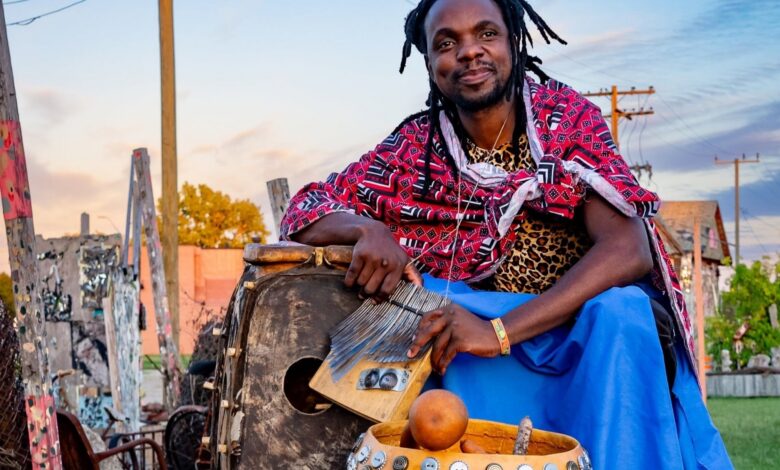
Zimbabwean multi-instrumentalist, composer, cultural educator and author Othnell “Mangoma” Moyo is set to bring his distinctive interpretation of indigenous Zimbabwean music to South Africa this weekend. Born and raised in Chipinge, Moyo will perform tomorrow at the Dr Miriam Makeba Concert Hall at the Unisa Muckleneuk Campus in Pretoria. The performance promises more than an evening of traditional music, as audiences can expect a combination of live instrumentation, storytelling, cultural education and meaningful exchange. Moyo has built his career around preserving Zimbabwe’s musical heritage while presenting it in forms that remain relevant to contemporary audiences. His Pretoria appearance therefore provides an opportunity for South African audiences to experience the work of an artist who continues to champion indigenous knowledge through performance, teaching, research and writing.
Known internationally as “Mangoma”, Moyo has spent years researching, performing, teaching and documenting Zimbabwe’s diverse musical traditions. His work connects traditional performance with contemporary artistic expression, allowing him to operate both as a musician and as a cultural educator. With more than 1 500 performances across Africa, Europe, North America and other parts of the world, he has developed an international profile as an ambassador for Zimbabwean indigenous music. His extensive knowledge of traditional instruments is one of the defining features of his performances. His collection and repertoire include several types of mbira, matepe, valimba, ngororombe, chipendani, hosho and traditional drums, giving audiences an opportunity to hear instruments that are deeply connected to Zimbabwean cultural history.
Moyo does not approach these instruments simply as historical objects or relics of the past. Instead, he presents them as living artistic forms that can communicate with modern audiences while retaining their cultural significance. His performances explore the relationship between music, history, identity and knowledge, creating experiences that encourage audiences to listen beyond the sound itself. Speaking ahead of his Pretoria performance, Moyo explained that his work is motivated by the need to keep indigenous knowledge alive while creating opportunities for people to experience traditional culture in new ways. He said his use of traditional instruments, stories and rhythms is not simply about recreating the past, but about creating meaningful experiences for audiences today. For Moyo, every performance provides an opportunity to share Zimbabwean knowledge and identity with people from different backgrounds while encouraging younger generations to value the traditions of their own communities.
His commitment to cultural education extends well beyond the concert stage. Moyo has conducted workshops, masterclasses, lecture demonstrations and artist residencies at more than 50 universities and educational institutions around the world. His educational engagements have included institutions such as the University of Missouri, Duke University, Dartmouth College, the University of Florida, Lewis and Clark College, Rochester Institute of Technology, Skidmore College and Union College. These programmes allow him to introduce students to traditional music while also explaining the cultural systems that give the music meaning. His teaching covers areas such as instrument construction, oral traditions, dance, storytelling, rhythm and the philosophies connected to traditional music-making. This approach presents indigenous music as a broader knowledge system linked to community, history, spirituality, language and everyday life.
Moyo’s international educational work has helped position him as an important bridge between Zimbabwean communities and audiences seeking a deeper understanding of African indigenous arts. Rather than separating performance from cultural context, he encourages participants to explore how music functions within communities and how knowledge passes between generations. This method also gives students an opportunity to understand the practical skills involved in making and playing traditional instruments. It demonstrates that preserving musical heritage involves more than keeping old instruments in museums or archives. It requires active participation, teaching, performance and documentation. Moyo’s work reflects this broader approach by placing indigenous knowledge in spaces where musicians, students, researchers and members of the public can engage with it directly.
In 2024, Moyo expanded his cultural preservation work by establishing the Ngoma Ingungu Cultural Arts Centre in Domboshava, Zimbabwe. The centre provides a dedicated space for safeguarding indigenous knowledge while encouraging cultural exchange between Zimbabwean communities and international visitors. Its activities include study camps, artist residencies, instrument-making programmes, performances and cultural immersion experiences. Participants can engage with Zimbabwean music, dance, language, food and traditional approaches to learning while working directly with community practitioners. The centre also creates opportunities for young artists to learn from experienced cultural practitioners and develop a deeper understanding of their heritage. For Moyo, the project represents another important step towards ensuring that Zimbabwe’s cultural traditions remain active, accessible and relevant to future generations.
His cultural preservation work has also entered the world of publishing. Moyo recently launched his second book, “Matepe Book One: A Thunderstorm in the Deze, Echo of the Ancestors”, which contributes to the documentation and transmission of matepe music and its performance practices. The publication reflects his belief that indigenous music must be documented alongside being performed if its knowledge is to survive across generations. Through writing, he combines practical musical information with cultural context that can benefit musicians, educators, researchers and other students of African music. Documentation can provide future practitioners with valuable information about instruments, rhythms and performance traditions that might otherwise become difficult to access. His work as an author therefore complements his work as a performer and educator, creating another avenue through which Zimbabwean musical knowledge can be preserved and shared.
One of Moyo’s most distinctive creative works is Saungweme, an innovative solo performance that brings together up to 11 different mbira types alongside percussion, voice and storytelling. The production demonstrates the possibilities of presenting traditional instruments within a contemporary concert environment without disconnecting them from their cultural foundations. Through Saungweme, Moyo explores the versatility of the mbira while creating an immersive experience that combines music, narration and cultural storytelling. The performance also highlights his abilities as a multi-instrumentalist and composer, showing how traditional sounds can be arranged and presented for audiences familiar with both contemporary and indigenous performance styles. His approach reflects an evolving Zimbabwean musical landscape in which traditional forms can be reimagined while remaining connected to their origins.
Moyo’s contribution to arts and culture has received recognition beyond Zimbabwe, including the International Labour Organisation’s Green EnterPRIZE Award in 2019. He was also nominated for a Zimbabwe Music Awards in 2023, further highlighting the recognition surrounding his work as a musician and cultural practitioner. Despite these achievements, his work continues to move between international stages, university classrooms, cultural centres and communities. That combination remains central to his identity as “Mangoma” and helps distinguish his contribution from a career focused solely on performance. His understanding of cultural preservation encompasses live music, education, instrument-making, research, writing and community engagement. It also reflects his view that indigenous knowledge remains strongest when people actively use, teach, document and share it.
The upcoming Pretoria performance is therefore significant not only as a concert but also as an opportunity for cultural dialogue between Zimbabwe and South Africa. Both countries have rich musical traditions shaped by community practices, oral histories, instruments, languages and intergenerational knowledge. Moyo’s appearance creates space for audiences to encounter Zimbabwean traditions through the perspective of a practitioner who has dedicated years to studying and performing them. His combination of music and storytelling can help audiences understand the cultural meanings behind the sounds and instruments on stage. It also demonstrates how indigenous music can participate in contemporary cultural spaces without losing its connection to heritage. For South African audiences, the event offers a chance to engage with Zimbabwean cultural expression while contributing to the wider conversation about the preservation and evolution of African indigenous arts.
For Moyo, cultural preservation is not limited to concert halls or academic institutions. It happens whenever knowledge is shared through a performance, workshop, instrument-making session, book or conversation with a community elder. His career demonstrates how an artist can use several platforms to protect cultural knowledge while also encouraging new audiences to engage with it. From his more than 1 500 international performances to his educational programmes, the Ngoma Ingungu Cultural Arts Centre and his published work on matepe music, each part of his career contributes to the same broader mission. His Pretoria appearance will bring these ideas into focus through an evening built around music, storytelling and cultural exchange. As Othnell “Mangoma” Moyo continues to perform, teach and document Zimbabwean indigenous traditions, his work offers a powerful reminder that cultural heritage remains relevant when communities continue to practise it, teach it and create new ways for future generations to experience it.