Zimbabwe and Botswana Move Toward Passport-Free Travel in Landmark Regional Integration Deal
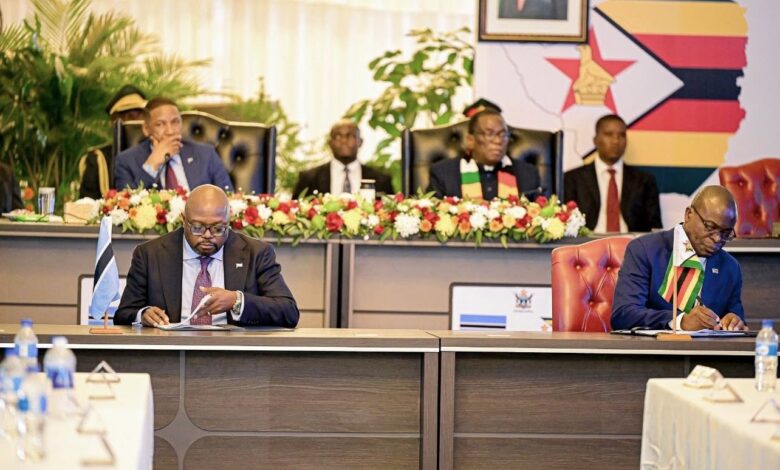
Zimbabwe and Botswana have taken a major step toward regional integration after agreeing to remove the need for passports for travel between their citizens. The agreement allows citizens of both countries to use national identity documents instead of passports, marking a significant shift in cross-border movement policy. The initiative was announced during the Fifth Bi-National Commission held at State House, co-chaired by President Emmerson Mnangagwa and Botswana President Advocate Duma Gideon Boko. The move is aimed at strengthening cooperation, improving mobility and deepening historical ties between the two neighbouring nations. It also reflects a broader push within Southern Africa to simplify travel and boost economic collaboration.
The plan will not be implemented immediately but will follow a phased approach supported by legal and technological frameworks. Initial implementation will focus on border communities and short-term travellers who frequently move between the two countries. Governments from both sides will need to harmonise immigration systems to ensure smooth execution. One-Stop Border Posts and digital clearance systems are expected to play a key role in supporting the transition. The agreement is designed to reduce travel barriers while maintaining secure and efficient border management.
President Emmerson Mnangagwa emphasised that Zimbabwe and Botswana share deep historical and cultural ties that go beyond formal diplomacy. He stated that the people of both countries are essentially one family with shared heritage and aspirations. According to him, borders separate administrative jurisdictions but do not divide communities that interact daily across them. He highlighted that wildlife, trade and social interactions already move freely across the border in many ways. His proposal focused on making formal travel systems reflect this reality.
Mnangagwa further explained that the initiative aims to ease movement of people, goods and services across the border. He proposed the introduction of national identity documents as a substitute for passports in a structured and phased system. He also stressed the importance of digital platforms to speed up border clearance processes. Efficient trade systems and simplified travel procedures were identified as key priorities. The goal is to reduce the cost of doing business and improve regional economic integration.
Botswana President Advocate Duma Gideon Boko supported the proposal and highlighted the need for modern technology to enable seamless travel. He discussed the introduction of advanced digital identity systems that allow travellers to store identification details on mobile devices. This would reduce the need for physical documents while improving convenience. He noted that both countries must adopt compatible technologies to avoid delays or system mismatches. Coordination between the two governments will therefore be essential for success.
President Boko also explained that migration between Zimbabwe and Botswana is already a natural and ongoing process. People move across borders in search of work, education and better opportunities. He noted that many Zimbabweans have settled in Botswana and vice versa due to shared opportunities and cultural similarities. He emphasised that such movement should not be viewed negatively. Instead, it should be managed in a way that benefits both economies.
He added that migration often leads to skills transfer between the two countries. Individuals bring expertise that contributes to development in their host country. Over time, some migrants integrate deeply into their new communities and may seek citizenship. According to Boko, this process is natural and should be welcomed. He stressed that migration only becomes controversial when misunderstood or mismanaged.
Both leaders highlighted the importance of unity and cooperation in addressing regional challenges. President Mnangagwa stated that Zimbabwe is committed to working closely with Botswana to ensure that progress is sustained. He called for the removal of bottlenecks that hinder shared development. He also emphasised the need for practical outcomes rather than symbolic agreements. The focus remains on delivering tangible benefits for citizens.
President Boko described the Bi-National Commission as a strong institutional framework for managing bilateral relations. He said it allows both countries to review progress and identify new opportunities for cooperation. The framework also ensures that agreements are implemented effectively across multiple sectors. These include health, agriculture, trade, energy, tourism and security. He noted that this structured cooperation has already produced measurable results.
Trade and economic cooperation remain central to the agreement between the two countries. Existing bilateral trade agreements already allow preferential and duty-free access for goods. This has encouraged increased commercial activity between Zimbabwe and Botswana. Private sector participation is also growing, particularly in sectors such as mineral processing, agriculture and manufacturing. Institutions like the Botswana Investment and Trade Centre continue to promote cross-border investment opportunities.
Both countries have also collaborated in areas such as health and disease control. Zimbabwe has supported Botswana with medical supplies and joint efforts to manage livestock diseases along the border. These actions demonstrate practical cooperation beyond diplomatic discussions. They also show how shared challenges can strengthen bilateral relations. The partnership continues to expand across multiple development areas.
The proposed passport-free travel system is expected to transform regional mobility in Southern Africa. It will make cross-border movement faster, cheaper and more efficient for citizens of both countries. It also supports broader goals of economic integration within the region. If successfully implemented, it could serve as a model for other neighbouring states. The initiative reflects a growing shift toward borderless cooperation in Africa.
The agreement between Zimbabwe and Botswana marks a significant milestone in regional diplomacy and integration. It combines political will, technological innovation and economic strategy to reshape how citizens move across borders. While implementation will require careful planning, the direction is clear. Both countries are committed to deeper cooperation and shared development. This historic decision signals a new chapter in cross-border relations in Southern Africa.