Zimbabwe And China Deepen Cultural Ties Through Virtual Dunhuang Exchange Forum
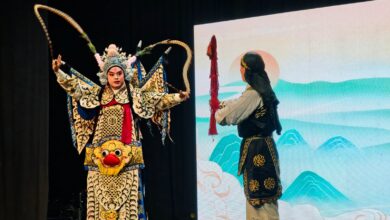
Zimbabwe and China have strengthened their cultural relations through a virtual exchange forum that brought together diplomats, scholars, government officials and students from both countries. The online event focused on Dunhuang culture, a historic symbol of the ancient Silk Road, and explored how shared cultural heritage can support deeper cooperation between the two nations. Participants discussed the role of cultural diplomacy in building mutual understanding while also reinforcing collaboration in education, trade and people-to-people relations. The forum highlighted how modern digital platforms are increasingly being used to connect nations through heritage and knowledge sharing. It also reflected growing efforts to place culture at the centre of international relations between Zimbabwe and China.
The event was jointly organised by the Foreign Affairs Office of the Gansu Provincial People’s Government, the Dunhuang Municipal People’s Government, the Dunhuang Academy and the Confucius Institute at the University of Zimbabwe. These institutions worked together to create a platform that would allow experts and participants from both countries to engage in discussions about history and cultural identity. The focus on Dunhuang culture was particularly significant due to its strong connection to the Silk Road, which historically linked Asia, Africa and Europe through trade and cultural exchange. Presenters highlighted how these ancient routes were not only economic pathways but also channels for ideas, traditions and shared human development. The forum positioned this historical context as a foundation for modern cooperation between Zimbabwe and China.
Speakers during the event examined the importance of the Silk Road in shaping global civilizations and promoting cross-cultural interaction. They emphasized that Dunhuang represents openness, learning and the blending of different cultures, values that remain relevant in today’s global environment. The discussions also explored how cultural exchange can support stronger diplomatic relations by building trust and understanding between nations. Participants noted that cultural diplomacy plays an increasingly important role in complementing political and economic partnerships. The use of a virtual platform allowed for wider participation and made it possible for experts and students from different regions to contribute meaningfully to the dialogue. This format also demonstrated how technology can enhance international cooperation in the modern era.
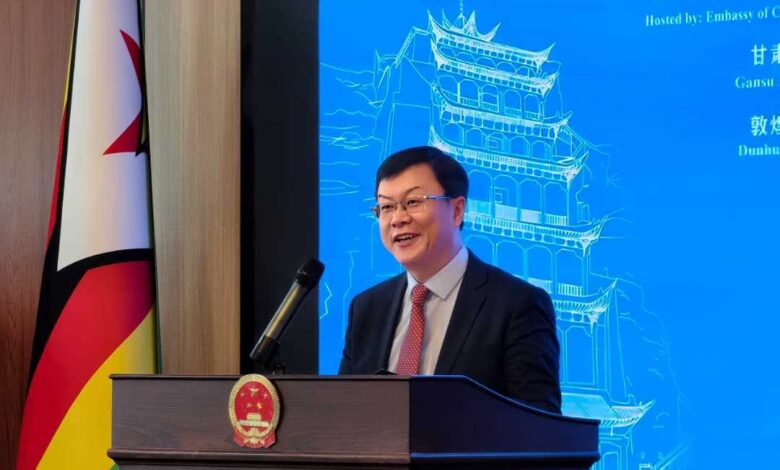
Delivering keynote remarks, Chinese Ambassador to Zimbabwe Zhou Ding said historical links between China and Zimbabwe extend far beyond modern diplomatic relations. He pointed to archaeological findings, including Chinese porcelain discovered at the Great Zimbabwe Ruins, as evidence of early interactions between the two regions. According to Zhou, such discoveries suggest that cultural and trade exchanges may have existed between the two civilizations centuries ago. He said Dunhuang embodies values of openness and mutual learning, which continue to guide relations between China and Zimbabwe today. His remarks reinforced the idea that cultural heritage can serve as a bridge connecting nations across time and geography.
Ambassador Zhou also highlighted the development of bilateral relations since the establishment of diplomatic ties in 1980. He noted that cooperation between the two countries has expanded significantly in areas such as infrastructure, energy and public services. Key projects supported by China include the New Parliament Building, Robert Gabriel Mugabe International Airport and Victoria Falls International Airport. He also referenced major upgrades to Hwange Power Station and Kariba South Power Station, which have contributed to Zimbabwe’s energy capacity. These projects were presented as examples of practical cooperation that support national development and economic growth.
Beyond infrastructure, Zhou emphasized the importance of economic cooperation, trade and investment in strengthening Zimbabwe’s development agenda. He noted that Chinese involvement has helped create employment opportunities and support local industries. He also highlighted China’s zero-tariff policy for exports from African countries with diplomatic relations, describing it as a major opportunity for Zimbabwean businesses. According to him, this policy opens new pathways for Zimbabwean products to enter international markets and expand their global reach. The message reinforced the idea that economic and cultural cooperation are interconnected and mutually beneficial.
The virtual forum underscored the growing significance of cultural diplomacy in strengthening international partnerships. It demonstrated that Zimbabwe and China are not only focused on economic collaboration but also on building deeper understanding through shared cultural experiences. By engaging in discussions about history, heritage and education, both countries aim to strengthen long-term relations at multiple levels. The involvement of academic institutions such as the Confucius Institute at the University of Zimbabwe further highlights the role of education in supporting these efforts. Students and scholars were given a platform to learn, share and engage with global perspectives on culture and history.
As Zimbabwe and China continue to expand their cooperation, cultural exchange initiatives like the Dunhuang forum are expected to play an increasingly important role. These platforms help build connections that go beyond government agreements by encouraging direct interaction between people. They also support a broader understanding of shared values and historical links that shape modern relations. The forum demonstrated how culture can serve as a foundation for stronger diplomatic and economic partnerships. It also reinforced the idea that collaboration between nations is most effective when it includes both material development and cultural understanding.