Zimbabwe Launches US$8.7 Million Solar and Internet Connectivity Project for Schools
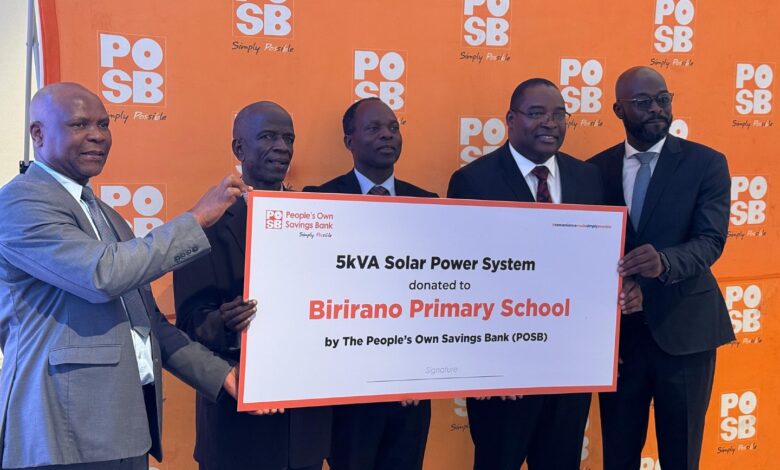
Over 400 schools across Zimbabwe are set to benefit from a US$8.7 million initiative aimed at expanding access to clean energy and digital connectivity. The project, launched by the Post Office Savings Bank (POSB) in partnership with the government, targets both education and community development.
POSB Divisional Director for Retail Banking, Lawrence Kupika, announced at the Harare launch that the programme aims to power 400 schools, 2,700 households, and 400 small and medium enterprises by 2027. He described the initiative as anchored on three pillars: clean energy access, sustainable financing, and digital connectivity.
“This programme is our contribution to the National Renewable Energy Policy and to international commitments under the Paris Agreement and the UN Sustainable Development Goals, particularly SDG 7 and SDG 13,” said Mr. Kupika.
The initiative is designed to deliver reliable electricity and high-speed internet to rural and hard-to-reach schools, supporting e-learning and modern education delivery. The inclusion of solar power and Starlink internet kits ensures that students in remote areas can access digital learning resources.
School representatives have already noted significant improvements. Amos Manzunzu, speaking on behalf of a participating school, said the programme has transformed their learning environment. “We used to face power and internet challenges at our school, but thanks to this programme, we now have reliable electricity and internet services. Our learners can now participate in curriculum activities that require online access,” he said.
Minister of Primary and Secondary Education, Torerai Moyo, praised the project for modernising education and promoting equitable access to digital tools. “The introduction of solarisation and Starlink kits represents not only a technological upgrade but also a commitment to ensuring that every child has access to quality education, regardless of their geographic location. This programme harnesses solar energy to power schools, especially in remote areas without electricity,” Minister Moyo said.
The US$8.7 million initiative is part of Zimbabwe’s broader strategy to advance renewable energy adoption while bridging the digital divide. By integrating solar power and internet connectivity, the project is expected to improve learning outcomes, support teachers with digital resources, and create a foundation for long-term community development.
By 2027, the programme will have impacted education, households, and small businesses, contributing to sustainable energy access and digital inclusion nationwide.