Umdlewadlewane Anthology Preserves Matabeleland Heritage Through Poetry by Liberty Ndaba
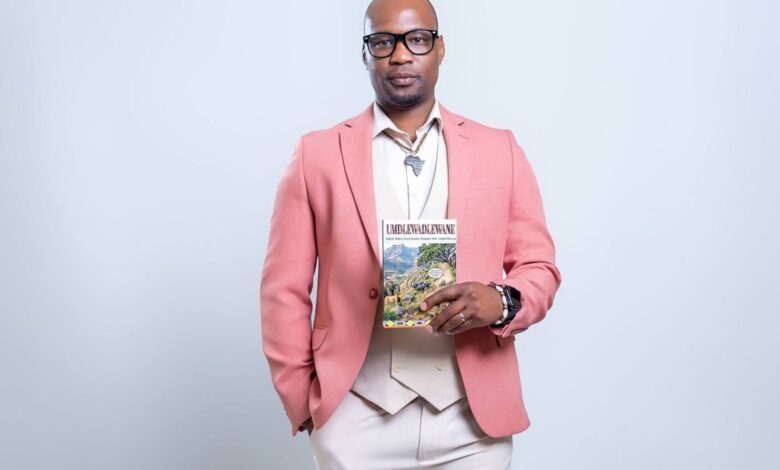
For many years, former Heritage Studies teacher and Bulawayo-based master of ceremonies Liberty Ndaba, widely known as uMahlabayithwale, stood in classrooms teaching Zimbabwe’s history and cultural identity. His lessons often covered place names, traditions and historical landmarks, yet he repeatedly noticed a gap in the learning materials. Many textbooks used in schools contained limited references to Matabeleland, leaving students with examples that felt distant from their daily lives. This disconnect between curriculum content and lived experience became a growing concern for him over time. It eventually pushed him to rethink how heritage could be documented and taught in a more inclusive and relatable way.
While teaching Heritage Studies, Ndaba realised that learners struggled to connect with material that rarely reflected their own surroundings. Most of the examples in textbooks focused on other regions, with limited representation of Matabeleland South, Matabeleland North and Bulawayo. He often had to explain unfamiliar places and historical references that were not part of the students’ environment. This made lessons harder to engage with and weakened the sense of cultural identity among learners. The experience left a lasting impression and planted the foundation for a creative response that would later become a major literary work.
Instead of accepting the absence of local representation in educational materials, Ndaba chose to create his own contribution. He turned to poetry as a medium that could capture history, culture and identity in a more expressive form. This decision led to the creation of Umdlewadlewane, a 147-page anthology containing 59 poems dedicated to Matabeleland’s heritage. The collection focuses on documenting the region’s landscapes, institutions, personalities and historical experiences. Through this work, he aimed to preserve cultural memory in a way that is both artistic and educational.
Ndaba has explained that the idea behind the anthology was deeply rooted in his teaching experience. He observed that many textbooks were authored without strong representation from Matabeleland, resulting in limited regional visibility. Learners were often expected to study places they had never visited, making comprehension more difficult. Teachers themselves sometimes struggled to provide context for these examples. This imbalance motivated him to ensure that local history and culture were properly recorded and shared through literature.
The anthology covers a wide range of themes, extending beyond heritage and history into language, culture, onomastics, gender issues, drug abuse, love and social development. However, heritage remains the central focus throughout the collection. Ndaba uses poetry to highlight schools, communities, historical sites and cultural practices across Matabeleland. He also places emphasis on identity and belonging, ensuring that readers can recognise their own environments within the text. This approach allows the anthology to function as both a cultural archive and a literary work.
A key feature of Umdlewadlewane is its recognition of individuals whose contributions are often overlooked. Ndaba highlights achievements in sports, music, arts and other sectors, giving attention to both well-known figures and lesser-known contributors. He believes that cultural memory should include all levels of achievement, not only widely celebrated names. He notes that public conversations often focus on iconic figures such as football legend Peter Ndlovu, while other talented individuals receive less recognition. Through his poetry, he seeks to correct this imbalance by documenting a broader range of voices.
Ndaba also uses the anthology to reflect on the importance of acknowledging local talent across different fields. He points out that many musicians and athletes make valuable contributions without receiving widespread recognition. By including such perspectives in his writing, he aims to ensure that cultural appreciation is more inclusive. His work encourages readers to value both prominent and emerging figures within their communities. This approach strengthens the idea that heritage is built collectively rather than individually.
Beyond documentation, the anthology also reflects Ndaba’s commitment to mentorship and youth development. As a former teacher, he collaborated with three of his former students, Liesel Masuku, Cleopatra Ntini and Sanele Feleweni, to contribute to the book. This collaboration provided young writers with practical experience in publishing and creative expression. Ndaba has expressed a strong belief in giving young people opportunities to develop their skills. He sees them as future custodians of culture and language who must be empowered early.
The title Umdlewadlewane is drawn from a Ndebele folktale that reinforces the book’s central message. In the story, animals search for a mysterious fruit whose name is known only by a man living on a mountain. After many attempts, a tortoise succeeds in retrieving the knowledge and carefully carries it back, repeatedly repeating the name to avoid forgetting it. The tale symbolises the value of knowledge, memory and preservation. Ndaba sees a strong connection between the tortoise’s journey and his own mission as a writer.
For Ndaba, the anthology represents a personal responsibility to preserve stories that risk being forgotten. He compares himself to the tortoise, carrying cultural knowledge back to the community for future generations. He believes that literature plays a vital role in protecting indigenous languages, traditions and identity. Without written records, he warns, cultural memory becomes fragile and difficult to sustain. His work in isiNdebele aims to strengthen linguistic heritage and ensure it remains accessible to younger generations.
Umdlewadlewane marks Ndaba’s first published book and represents both a creative milestone and a cultural mission. He has indicated that he intends to continue writing works that document Zimbabwe’s heritage and history. The anthology stands as a contribution to heritage-based education and cultural preservation. It also highlights the importance of storytelling in maintaining identity across generations. Through this work, Liberty Ndaba positions himself as a cultural recorder committed to safeguarding Matabeleland’s legacy for the future.