Thomas “Mukanya” Mapfumo Responds to Criticism Over Accepting a Gift, Reaffirms Commitment to Human Rights and Zimbabwe
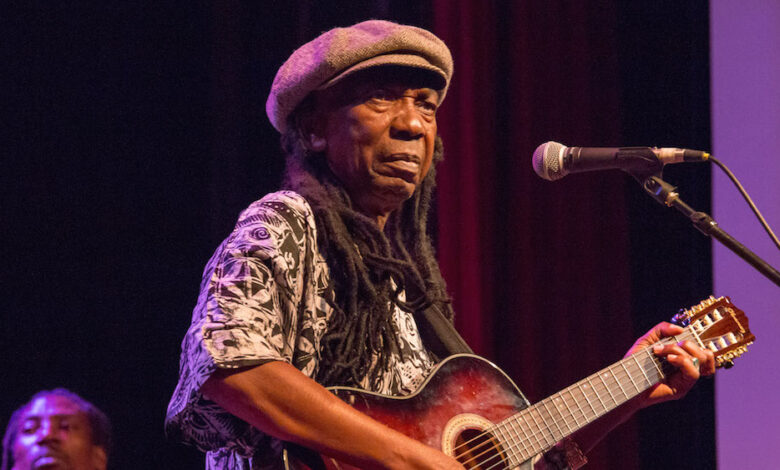
Zimbabwean music legend Thomas “Mukanya” Mapfumo has broken his silence following widespread public criticism over his decision to accept a gift that sparked heated debate across Zimbabwe and on social media. The Chimurenga music icon, who has spent decades using his music to speak against injustice and advocate for freedom, said he felt compelled to address his supporters after witnessing what he described as significant protest and public “noise” surrounding the matter. According to Mapfumo, thousands of comments, messages and online discussions questioned whether accepting the gift signaled a departure from the principles that have defined his career. His statement aims to reassure Zimbabweans that his lifelong commitment to justice, equality and human rights remains unchanged despite the controversy. The veteran musician emphasized that one decision should not erase decades of activism or redefine his legacy.
Mapfumo acknowledged that many of his loyal fans were deeply disappointed by his decision and admitted that he had seen numerous critical reactions across various social media platforms. He said people had gone as far as creating cartoons that portrayed him as a hypocrite or a selfish individual who had abandoned struggling Zimbabweans for personal gain. Rather than dismissing the criticism, Mapfumo expressed gratitude for the concern shown by supporters who care about his reputation and the values he has represented throughout his musical career. He said the public reaction demonstrated that Zimbabweans continue to hold him to a high moral standard because of the role he has played in speaking out against oppression. While he understood why many people were upset, he maintained that the criticism was based on misunderstandings about his intentions.
Central to Mapfumo’s statement was his insistence that accepting a gift from a supporter does not amount to abandoning the struggle for justice or endorsing any political agenda. He stressed that his beliefs have not changed and that his conscience remains clear. According to Mapfumo, he fully understands the hardships faced by ordinary Zimbabweans, including poverty, unemployment and the daily challenges confronting many families. He argued that accepting a personal gift should not be interpreted as approval of the country’s political or economic situation. Instead, he said his commitment to advocating for freedom, equality and human rights remains as strong today as it has always been throughout his decades-long career.
The musician also addressed accusations that he had “crossed the floor” politically by accepting the gift. He firmly rejected that interpretation and stated that he has never abandoned his principles or turned his back on the people he has long represented through his music. Mapfumo emphasized that he has consistently stood against injustice and intends to continue doing so for the rest of his life. He explained that his activism has always been rooted in personal conviction rather than political affiliation. For that reason, he believes it is unfair to suggest that one personal decision automatically invalidates his decades of advocacy for Zimbabwe’s ordinary citizens.
Another point Mapfumo highlighted was what he described as inconsistency in public reactions. He noted that numerous international musicians, particularly artists traveling from the United States, have performed in Zimbabwe and accepted payment from the same individuals or organizations without attracting similar criticism. He questioned why his own acceptance of a gift generated significantly more outrage than comparable situations involving other performers. Mapfumo also pointed out that several respected Zimbabwean musicians have accepted similar gifts over the years without facing the same level of public condemnation. By raising these comparisons, he suggested that the criticism directed at him may have been influenced more by his activist reputation than by the act itself.
Mapfumo further clarified that although he is widely recognized as a human rights activist, he has never claimed to be an opposition politician. He argued that many of the comments circulating online incorrectly assumed he held a political responsibility that he has never accepted. According to him, political leadership belongs to elected politicians and opposition figures whose role is to seek government office, formulate policy and campaign for political change. He mentioned leaders such as the late Morgan Tsvangirai and Nelson Chamisa as examples of individuals whose responsibility is to provide political leadership and challenge governments through the electoral process. Mapfumo explained that while he supports justice and freedom, his own contribution has always come through activism and music rather than direct political participation.
The veteran singer also distinguished between activism and political leadership in order to explain what he believes his role should be. He described an activist as someone who speaks out whenever injustice occurs without necessarily seeking public office or leading a political movement. By contrast, he said opposition politicians are expected to organize supporters, contest elections and offer an alternative government to the people. Mapfumo stressed that he has never claimed to possess a mandate to lead Zimbabwe politically or to act as the country’s ultimate liberator. Instead, he sees himself as an independent voice who uses his music to raise awareness about social issues, defend human rights and encourage accountability.
Seeking to reassure the public further, Mapfumo revealed that he plans to donate most of the proceeds associated with the gift to a local charity. He explained that his acceptance of the gift was made without conditions and should not be interpreted as an endorsement of any political movement or organization. He also noted that respected musicians including Feli Nandi, Alick Macheso, Baba Manyeruke, Leonard Zhakata and the late Nicholas Zakaria have accepted similar gifts over the years. In addition, he pointed out that many religious leaders from different churches have also accepted comparable gestures without provoking widespread public outrage. By highlighting these examples, Mapfumo argued that his situation should be viewed with fairness and consistency.
Throughout his statement, Mapfumo repeatedly appealed for understanding, respect and space to continue serving Zimbabwe in the way he believes is most effective. He rejected suggestions that he had sold out his conscience or compromised the values that have guided his music for generations. Instead, he reaffirmed his intention to remain a vocal advocate for freedom, equality and social justice for as long as he lives. He encouraged Zimbabweans who are frustrated by the country’s political situation to direct their demands toward leaders whose responsibility is to provide political solutions and accountability. Concluding his message, Mapfumo thanked his supporters for their passion and engagement while reaffirming that he remains committed to exposing injustice through his music and activism. He insisted that despite the recent controversy, his dedication to the people of Zimbabwe remains unwavering and that he will continue fighting for justice until the end of his life.