Sentencing Looms for Bellarmine Mugabe and Co-Accused in High-Profile South African Firearm Case
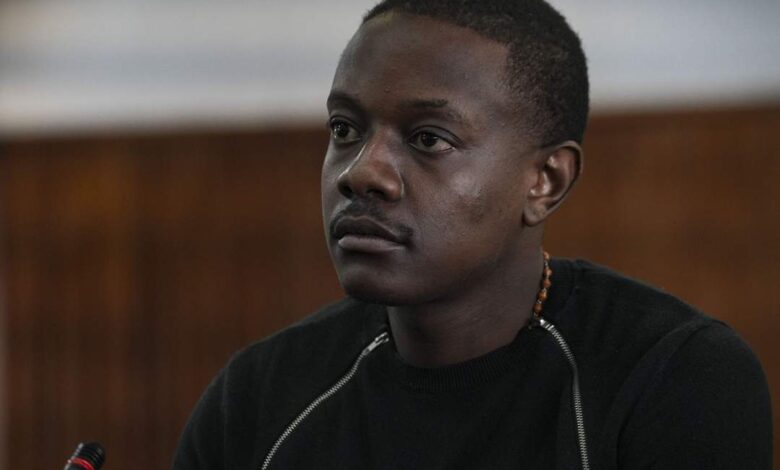
The sentencing of Bellarmine Mugabe, son of the late former Zimbabwean president Robert Mugabe, and his co-accused Tobias Matonhodze is set to take place today, marking a critical moment in a case that has drawn significant public attention in South Africa and Zimbabwe. The proceedings follow a series of court developments in which both accused entered guilty pleas to multiple charges linked to a violent incident in Johannesburg. The case has been closely followed due to the individuals involved and the seriousness of the allegations presented before the court. It also raises broader questions about firearm-related offences, immigration violations and accountability in high profile legal matters. As the court prepares to deliver judgment, both the defence and prosecution have presented sharply contrasting arguments on sentencing.
Bellarmine Mugabe has pleaded guilty to being in South Africa illegally and to pointing a firearm during an incident that occurred shortly before a shooting involving his security guard, Sipho Mahlangu, at his Hyde Park residence in Johannesburg. The court has heard that the firearm incident formed part of a chain of events that escalated into a more serious violent confrontation two weeks later. While Mugabe’s legal team has highlighted his guilty plea as an act of cooperation, the state has raised concerns about the seriousness of the conduct involved. The matter has been treated as a significant criminal case due to the alleged misuse of a firearm and the circumstances surrounding the residence where the events unfolded. His immigration status has also formed a central part of the prosecution’s case.
Co-accused Tobias Matonhodze has admitted to more serious charges, including attempted murder, defeating the ends of justice, illegal possession of ammunition and contravening immigration laws. His guilty plea places him at the centre of the most severe allegations in the case, particularly the attempted murder charge linked to the shooting of Sipho Mahlangu. The prosecution has argued that Matonhodze’s actions demonstrate a pattern of unlawful behaviour that extends beyond a single incident. Although it has been confirmed that Mahlangu received financial compensation for the ordeal, prosecutors maintain that this does not erase the gravity of the offences committed. The court has been asked to consider both the legal and public interest implications of the case when determining an appropriate sentence.
The defence teams for both accused have requested non custodial sentences, arguing that the guilty pleas and compensation to the victim should be viewed as mitigating factors. They have also suggested that the cooperation shown by the accused during proceedings should weigh in their favour during sentencing. However, the state has strongly opposed any form of leniency, arguing that the accused have not shown genuine remorse for their actions. Prosecutors have emphasised that the absence of a recovered firearm remains a major concern, suggesting that full accountability has not yet been achieved. They argue that this factor undermines claims of cooperation and raises questions about whether justice has been fully served.
As the court prepares to deliver its ruling, the case has drawn attention for its legal complexity and the high profile nature of those involved. The proceedings have highlighted issues surrounding illegal possession of firearms, cross border immigration violations and violent crime within private residences. The outcome is expected to reflect the court’s assessment of both aggravating and mitigating factors presented during the trial. Legal observers note that the decision could set an important precedent in how similar cases are handled in future. The sentencing decision today will determine whether the accused receive custodial sentences or whether the court accepts the defence argument for alternative punishment.
The final judgment is expected to bring closure to a case that has unfolded over several months and has attracted public scrutiny due to the individuals involved and the seriousness of the allegations. The court’s decision will also address broader concerns raised during the trial, including accountability for firearm related offences and the importance of upholding immigration laws. With both sides firmly presenting their positions, the sentencing outcome will be closely watched for its legal implications. As proceedings conclude, attention now turns to the court’s final ruling and the consequences it will carry for Bellarmine Mugabe and Tobias Matonhodze.