Option Dzikamai Nyahunzvi Explores Hunhu in “Zvatiri” at the National Gallery of Zimbabwe
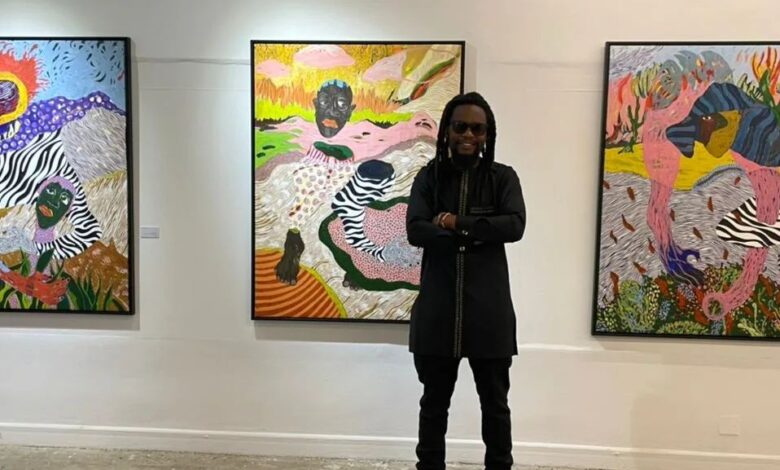
In Zimbabwe, hunhu, also known as ubuntu, guides how communities live together, honour elders, and respect each other’s rights. This cultural philosophy emphasizes shared responsibility, interconnectedness, and the transmission of wisdom across generations. Young artist Option Dzikamai Nyahunzvi has brought this idea to life in his latest solo exhibition, “Zvatiri” (Who We Are), currently showing at the National Gallery of Zimbabwe. The show calls on Zimbabweans to reconnect with their cultural values and heritage, highlighting the importance of identity, tradition, and belonging. Through paintings, installations, and live performance, Nyahunzvi creates a multidimensional experience that celebrates Shona culture while inviting viewers to reflect on their own place within it.
Nyahunzvi, born in 1992, has focused much of his artistic career on exploring Shona identity, ancestry, and cultural memory. Shona refers to a collective of related clans in Zimbabwe, each with its own traditions and symbols. In “Zvatiri,” he incorporates these traditions through unique techniques, such as layering Fabriano paper on canvas and cutting into it to reveal etching lines, echoing historical printmaking practices. His works often feature a black-and-white zebra motif representing the Mbizi totem, connecting the contemporary art to clan heritage. Materials drawn from Zimbabwean culture, combined with his engagement in live-art performances, create an immersive environment that bridges the past and present.
The exhibition includes a notable performance in which Nyahunzvi assumes the role of a mhondoro, a spirit medium connecting the living with ancestral energies. This act of activation emphasizes the spiritual dimension of Shona culture while also engaging with the gallery’s colonial history, originally opened by Queen Elizabeth II. Through the use of midziyo, traditional instruments, and sacred objects, the show invites audiences to experience the rituals and stories that shape Zimbabwean life. The interactive and sensory aspects of the exhibition encourage viewers to listen, see, and reflect, making culture tangible and immediate. Nyahunzvi’s approach positions “Zvatiri” as both a preservation of tradition and a contemporary reinterpretation of cultural expression.
The artist sees “Zvatiri” as a response to concerns about the erosion of values in modern life. He emphasizes the importance of celebrating the ordinary, everyday practices, and rituals that define community life, echoing themes from Zimbabwean musician Oliver Mtukudzi and South African scholar Njabulo Ndebele. By highlighting ordinary stories and traditions, Nyahunzvi encourages audiences to recognise the value in daily cultural practices and to reconnect with their roots. He hopes the exhibition sparks curiosity, reflection, and a desire to engage with Zimbabwe’s shared heritage. The show acts as a catalyst for conversation about identity, belonging, and the continuity of cultural knowledge in a rapidly changing world.
“Zvatiri” ultimately invites audiences to reclaim and honour their narratives while celebrating the richness of Shona culture. Nyahunzvi balances the sharing of cultural stories with respect for sacred traditions, ensuring that viewers gain insight without compromising the integrity of spiritual practices. The exhibition is both an artistic and cultural statement, reaffirming hunhu as a guiding principle in contemporary Zimbabwean society. By blending painting, installation, and performance, Nyahunzvi creates a holistic exploration of identity, ancestry, and collective memory. “Zvatiri” challenges audiences to reflect on who they are individually and collectively, positioning Zimbabwean culture at the forefront of global artistic dialogue.