Zimbabwe Media Professionals End Beijing Seminar With Strong Call for Strategic Media Reform and China-Zimbabwe Cooperation
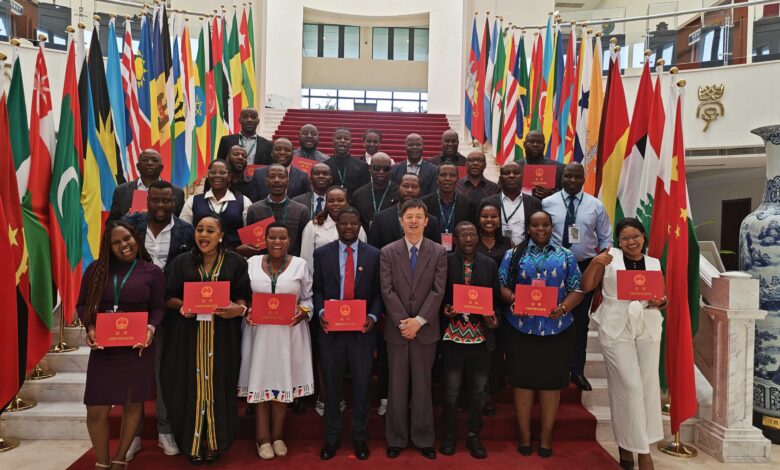
The two-week Seminar for Media Professionals for Zimbabwe concluded in Beijing today, marking a key moment in the evolution of media cooperation between Zimbabwe and China. The programme shifted collaboration from routine working-level exchanges to a more strategic focus on development, innovation and long-term partnership. Delegates described the experience as transformative, with discussions and site visits offering direct exposure to China’s development model. The closing ceremony highlighted that while the seminar has ended, the implementation phase for Zimbabwean media institutions has only just begun. Participants left with practical ideas aimed at reshaping how media supports national development goals.
Zimbabwe’s Ministry of Information, Publicity and Broadcasting Services Chief Director Jonathan Gandari delivered remarks at the closing ceremony on behalf of the delegation. He described China’s transformation as deeply instructive, pointing to rapid urban growth in cities such as Chongqing and successful poverty reduction in rural areas. He noted that China’s development model combines modernisation with cultural continuity rather than replacing tradition. According to Gandari, this balance offers a working example for countries seeking to modernise without losing identity. He emphasised that Zimbabwean delegates observed a country that respects its past while actively building its future.
The seminar was hosted by the Academy for International Business Officials under China’s Ministry of Commerce and included structured lectures on media responsibility, governance systems and technological innovation. The programme was led by Zimbabwe’s Minister of Information, Publicity and Broadcasting Services Dr Zhemu Soda, who earlier stated that such exchanges help build mutual understanding between nations. He also noted that the initiative supports Zimbabwe’s effort to broaden its media perspective beyond dominant Western narratives. Delegates visited several key institutions, including media organisations, the 798-751 Art District and Chongqing, which is often described as an “8D city” due to its complex urban layout and rapid infrastructure expansion. These visits provided practical insight into how media and development interact in a fast-changing economy.
Gandari outlined two major lessons that Zimbabwean media professionals should apply after the seminar. The first focuses on communicating with confidence and sovereignty by strengthening local platforms that promote national cohesion. The second stresses the importance of aligning communication strategies with national development blueprints to ensure consistent messaging around economic and social priorities. He also highlighted the growing role of media convergence, including artificial intelligence, as a tool that can reshape how national stories are produced and shared. These insights are expected to influence how Zimbabwe’s media sector approaches content creation, policy communication and audience engagement in the future.
The Chief Director also conveyed appreciation from Minister Soda, who returned home early due to prior national commitments. He noted that the minister’s original vision for the seminar was to gather first-hand knowledge that could improve the quality and depth of national narratives. That objective, according to Gandari, has been achieved through the experiences and observations shared by returning delegates. The group now carries what he described as a practical roadmap for strengthening media systems and improving institutional performance. This outcome reflects a broader effort to link international cooperation with domestic reform priorities.
AIBO President Wu Bin closed the seminar by encouraging participants to view the conclusion not as an ending but as a new phase of cooperation. He stressed that sustained engagement between Zimbabwe and China would be essential for turning shared knowledge into measurable outcomes. Gandari ended the ceremony on a personal note, thanking local coordinators and acknowledging the support of individuals who assisted the delegation throughout the programme. He also referenced a Chinese saying about unity and partnership, reinforcing the spirit of collaboration that defined the seminar. His closing message expressed optimism about future relations, stating that continued friendship and exchange will strengthen both countries’ communication landscapes.