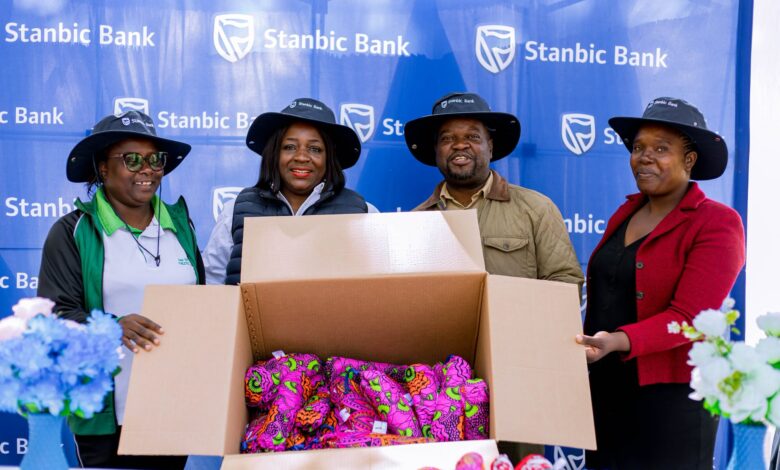
Stanbic Bank Zimbabwe has strengthened its commitment to improving access to education for girls by partnering with Talia Women’s Network to provide reusable sanitary pads, undergarments and menstrual health education to 1,500 girls across the country. The initiative, valued at US$15,000, forms part of the bank’s annual corporate social investment programme aimed at addressing period poverty in underserved rural communities. By providing reusable sanitary products that can last for up to two years, the programme seeks to ensure that girls remain in school without interruption during their menstrual cycles. Beyond the donation of essential hygiene products, the initiative also focuses on equipping young girls with accurate information about menstrual health and personal hygiene. Through this partnership, Stanbic Bank Zimbabwe and Talia Women’s Network continue working toward creating an environment where every girl can learn with dignity and confidence.
The 2026 programme officially commenced over the weekend with the first distribution taking place at Murembe High School and Chivese Primary School in Bindura, approximately 90 kilometres northwest of Harare. During the launch, 370 girls received packs containing reusable sanitary pads and undergarments as part of the first phase of the nationwide campaign. The programme will continue reaching schools in different provinces until all 1,500 beneficiaries have been supported. The initiative reflects Stanbic Bank Zimbabwe’s long-term commitment to improving educational outcomes by removing one of the barriers that prevent many girls from attending school regularly. The bank has consistently expanded the programme over the years, reaching more communities with each successive campaign.
Stanbic Bank marketing specialist for client segments, Tendai Rafemoyo, said the institution remains committed to empowering girls from underserved communities by ensuring they have access to essential menstrual hygiene products. She explained that the bank recognizes the challenges many girls face when they cannot afford sanitary products, forcing some to rely on unsafe alternatives while others stay away from school entirely during their menstrual periods. According to Rafemoyo, the reusable sanitary pads supplied through the programme provide a practical solution that supports uninterrupted learning for at least two years. She emphasized that the initiative aligns with Stanbic Bank’s broader Corporate Social Investment strategy, which focuses on education, health and sanitation, environmental sustainability and sports development. By placing the welfare of the girl child at the centre of these efforts, the bank aims to create lasting positive change within communities.
In a statement shared during the launch of the programme, Stanbic Bank Zimbabwe reaffirmed its belief that education begins with dignity and confidence. The bank noted that access to reusable sanitary pads and menstrual health education helps eliminate barriers that prevent girls from participating fully in school activities. It also highlighted that the partnership with Talia Women’s Network ensures beneficiaries receive not only hygiene products but also valuable educational sessions covering menstrual health and reproductive wellness. According to the bank, supporting girls in this way contributes directly to uninterrupted learning and improved educational opportunities. The initiative reflects the organization’s ongoing commitment to investing in the future of young Zimbabweans through practical and sustainable interventions.
Talia Women’s Network has played an important role in the success of the programme by delivering comprehensive menstrual health and hygiene education alongside the distribution of reusable sanitary products. The registered non-profit organization works to create communities where girls and young women become confident, healthy, morally grounded and economically empowered. Founder Saliwe Zakaria explained that menstrual health and hygiene remain one of the organization’s core focus areas because no girl should miss school simply because of her period. She credited Stanbic Bank Zimbabwe for consistently supporting this important work since the partnership began in 2019. Over the years, the collaboration has enabled thousands of vulnerable girls to receive both essential hygiene products and life-changing health education.
Zakaria said the partnership continues to strengthen efforts aimed at ending period poverty across Zimbabwe. She noted that providing reusable sanitary pads alone is not enough, making menstrual health education an equally important component of the programme. During the launch in Bindura, she personally conducted hygiene and reproductive health sessions for girls from both participating schools. These educational discussions provided learners with accurate information about menstruation, personal hygiene and reproductive health while encouraging them to approach these topics with confidence rather than fear or embarrassment. Such knowledge empowers girls to make informed decisions about their health while promoting greater self-esteem and wellbeing.
The impact of the initiative has also been welcomed by educators who witness the daily challenges many learners face. Murembe High School deputy head Amos Zembere expressed appreciation for both the donation of reusable sanitary pads and the educational sessions delivered by Talia Women’s Network. He said the programme would significantly improve attendance among girls who previously struggled to participate consistently in classroom activities during their menstrual cycles. Zembere also observed that the reproductive health lessons benefited teachers by strengthening their understanding of issues affecting learners. According to him, the donation has given girls greater confidence, knowing they now have reliable menstrual hygiene products that allow them to focus on their education.
Stanbic Bank Zimbabwe has steadily expanded the reach of its reusable sanitary pads programme over recent years. In 2025, the bank conducted the initiative in two phases, distributing sanitary products and undergarments to girls attending schools in Buhera, Murewa, Chipinge, Mashonaland West, Matabeleland and Masvingo. The continued growth of the programme demonstrates the bank’s long-term commitment to addressing barriers that prevent girls from achieving their educational goals. By working closely with experienced partners such as Talia Women’s Network, Stanbic Bank ensures that each intervention combines practical assistance with meaningful education. As the 2026 campaign progresses toward reaching 1,500 girls nationwide, the initiative continues to make a lasting contribution to reducing period poverty, promoting dignity and ensuring that every girl has the opportunity to remain in school, pursue her dreams and build a brighter future.